

Table of Contents
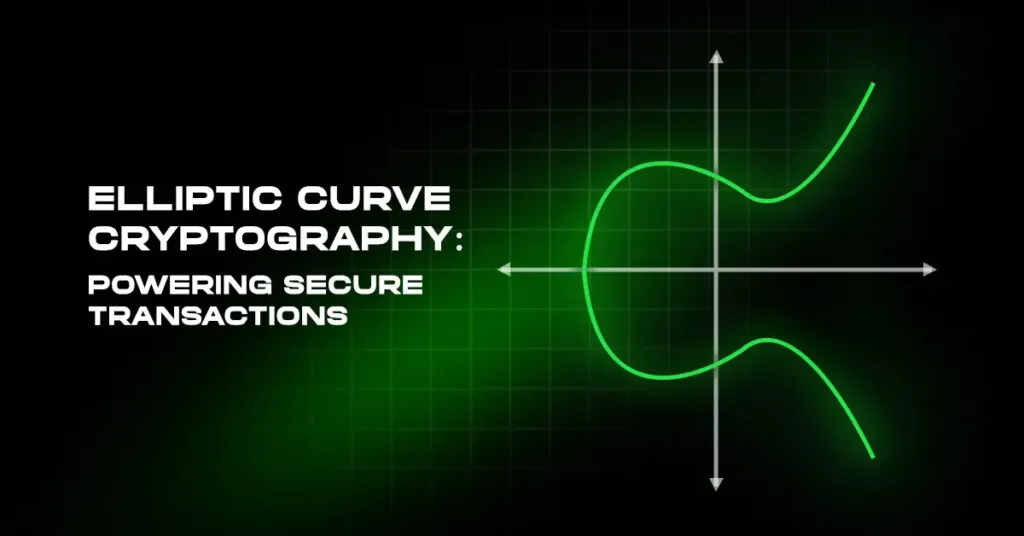
How are blockchain networks maintaining security even while scaling? The answer to this is by using sophisticated cryptographic methods. Among the most efficient methods is elliptic curve cryptography.
It provides robust security with reduced keys and quicker computation. In blockchain, this method protects wallets, authenticates transactions, and enhances privacy. Its efficiency enables blockchains to scale without sacrificing safety.
As threats continue to emerge, particularly quantum threats, the employment of strong cryptography is as crucial today.
This article examines the way elliptic curve cryptography drives the blockchains of today and gets them ready for tomorrow.
This article describes how elliptic curve cryptography keeps blockchain networks safe. It dissects its speed, strength, and structure.
Take a look at how it enables faster transactions. Find out why it is significant in the era of quantum threat.
What is meant by Elliptic Curve Cryptography?
It is public-key cryptography. It employs mathematical curves to generate secure keys. They are shorter than keys in most cryptographic algorithms, such as RSA, but provide the same or superior security.
This is a method that relies on the intractability of solving elliptic curve discrete logarithm problems. The inversion of the private key from a public key is effectively impossible. This is why elliptic curve cryptography is efficient as well as secure.
Why Blockchain Needs Elliptic Curve Cryptography
Blockchains are decentralized. Anyone can verify or add data to the network, or access it. This is a security problem.
All users must hide their identity and transactions. There must be robust encryption to avoid fraud and misuse. Elliptic curve cryptography addresses this problem with secure and efficient solutions.
It secures private keys, which verify ownership and legitimize transactions. Once the attackers gain access to those keys, they can steal money or hijack accounts. Elliptic curve cryptography is also scalable with minimal key sizes.
Smaller keys require smaller processing capacity. It boosts network speed and reduces storage requirements. Faster operations maintain blockchain networks’ scalability. Security stays robust even with this speed.
The method is scalable to billions of devices and users. It is also well-suited to mobile wallets and embedded systems. That renders it a good fit for uses in contemporary blockchain.
This method of encryption makes trust possible on decentralized networks without slowing them down.
How It Works in Blockchain Transactions
Private keys are controlled by users on a blockchain network. Private key comes with a unique public key. Elliptic curve cryptography is used to create the public key securely. It keeps the private key concealed. Users never make it available to the network.
When someone is initiating a transaction, they are signing it with their private key. That is how a person can prove possession without discarding the key.
The network then receives the signed transaction. Every node checks it out with the public key.
After the cryptographic math is fine, the transaction is genuine. The process safeguards against forgery and tampering.
It also prevents unauthorized behavior. Elliptic curve cryptography makes verification both fast and secure. It safeguards digital assets throughout the blockchain.
It retains users in full control. Transactions pass through the network with trust and openness.
The signature system is also immune to cracking. That makes it a crucial part of secure blockchain use worldwide.
Benefits of Elliptic Curve Cryptography in Blockchain
Blockchain networks require efficiency, speed, and security. This cryptography approach provides all three without compromising efficiency or security.
High Security
Blockchains require robust encryption to safeguard assets. Elliptic curve cryptography provides robust security with smaller key sizes. These small keys are immune to brute-force attacks. Even sophisticated systems cannot crack them. That makes the network more secure from assault. Users can be confident that their private keys will remain secure.
Efficiency
Speed is an issue for blockchain activity. Transactions must process smoothly. Signing and verification using elliptic curve cryptography happen faster. It consumes fewer resources in computation. This makes it possible for nodes to verify blocks immediately. Faster processing ensures a smoother user experience.
Low Storage Requirements
Block size determines the performance of a blockchain. Big data decelerates syncing and validation. Small keys minimize data in each transaction. Space for storage is preserved, which is precious. Networks are quicker to operate and less expensive to run. Developers are able to create leaner applications with less memory demand.
Scalability
The scaling of blockchain grows. More transactions and users need to be processed. Smaller keys and quicker processes enable it. New blocks are added to systems quickly. Confirmation takes no time for users. Networks scale affordably without compromising security. That makes international adoption possible across industries.
Less Energy Consumption
Blockchain networks consume power in cryptographic calculations. Less computation reduces the energy consumed. Shorter keys require fewer cycles to execute tasks. It reduces power consumption per transaction. Energy savings reduce its ecological footprint.
Quantum-Resistant Cryptography: Is ECC Enough?
Quantum computers pose elliptic curve cryptography more and more danger. Quantum computers can instantly solve difficult math problems. This capability can shatter present cryptographic systems. Blockchain networks are gradually incorporating safer alternatives.
The alternatives belong to quantum-resistant cryptography. They are immune to attacks even from advanced quantum computers.
They employ other mathematical structures in such a way that they can remain secure. Elliptic curve cryptography remains secure and efficient at present.
However, with the advent of quantum technology, future planning is critical. Scientists and developers attempt to incorporate quantum-safe practices into blockchains.
Future-long protection of digital assets will be made easy by this forward-thinking strategy.
Shifting to quantum-resistant cryptography ensures uninterrupted trust and security. The blockchain ecosystem needs to remain ahead of coming dangers in regard to system integrity.
ECC vs Traditional Cryptography
RSA has also been the de facto standard for years. It depends on radically large keys to encrypt data. The same security is achieved by elliptic curve cryptography with radically smaller keys.
As an example, having a 256-bit ECC key is the same as having a 3072-bit RSA key. That is very significant in terms of size and performance. Smaller keys result in less data that can be encrypted and decrypted.
This brings about faster processing and efficient use of resources. Efficiency is crucial in blockchain technology. Smaller keys help reduce storage space on the ledger. They also reduce computational burden on network nodes.
These advantages render elliptic curve cryptography highly appropriate for a decentralized network. It facilitates quicker transactions and improves scalability without compromising security. This is the highest requirement for blockchain technology at this time.
Post-Quantum Cryptography: The Next Frontier
Post-quantum cryptography is the future of safeguarding digital systems. They are algorithms that will resist quantum computer attacks. In contrast to elliptic curve cryptography, post-quantum algorithms have other mathematical foundations.
They are interested in repelling the superior problem-solving capability of quantum computers. Scientists actively ensure these systems are blockchain technology-friendly. The objective is to preserve security along with quantum computing progress.
Post-quantum cryptographic systems are, at present, still experimental. Testing guarantees that they provide adequate protection without performance loss.
After demonstrating their reliability, they would be able to replace current cryptography on blockchains. This shift would secure information against future quantum attacks.
Post-quantum cryptography is essential to long-term blockchain’ security. It is the promise of secure systems that will remain secure when quantum capabilities exist. There are research papers studying how blockchain networks are gearing up to meet this future challenge.
ECC and Wallets
Crypto wallets utilize elliptic curve cryptography to produce secure public addresses. The public addresses enable secure receiving of funds. In funds transfer, wallets apply the private key to sign the transaction. The digital signature confirms ownership as well as authorization to transfer the funds. No one can transfer the funds without the private key.
The system makes sure that only the owner of the rightful claim manages their holdings. Security relies on the sophisticated mathematics of elliptic curve cryptography. It protects against misuse and forgery. Convenience with sufficient security is offered by wallets through this cryptographic technique. They are hence critical instruments in the blockchain environment.
Elliptic Curve Cryptography and Consensus Mechanisms
Consensus protocols like Proof of Work and Proof of Stake require good identity verification. Elliptic curve cryptography facilitates the verification of identities in the process of creating blocks. It prevents unauthorized people from developing new blocks.
This encryption also defends against Sybil attacks by keeping the nodes’ identities safe. Sybil attacks are attempts to overwhelm the network with spurious nodes.
Through prevention of this, elliptic curve cryptography provides trust in decentralized systems. It assists in security and integrity of blockchain networks.
This technology is crucial in ensuring fairness and reliability in the consensus. It fortifies the platform of blockchain management and operations.
Quantum-Safe Cryptography and Blockchain Evolution
Quantum-resistant cryptography employs methods that can’t be breached by quantum computers. Elliptic curve cryptography is not quantum-resistant. To counter this, certain blockchain architectures blend ECC with quantum-resistant algorithms.
This hybrid approach enhances security against current and potential attacks. It allows blockchains to remain as functional as quantum computing emerges. It finds a balance between performance and long-term security by combining these cryptographic methods.
Experts use this mix to future-proof blockchain networks. Becoming quantum-safe is a sign of growing awareness of future dangers.
Blockchain security builds by combining new cryptography with traditional cryptography. It is done so that systems are future-proofed for quantum.
Limitations of ECC in Blockchain
No system is exempt. Elliptic curve cryptography is not free from weaknesses:
Side-Channel Attack Weaknesses
Elliptic curve cryptography can leak information through computation. Attackers obtain keys by using timing, power, or electromagnetic signals. The danger needs robust countermeasures in hardware and software. Developers need to construct defenses against attacks to protect blockchain networks.
Quantum Computer Threat
Quantum computers are capable of solving mathematical problems much quicker than traditional computers. This quickness has the ability to crack elliptic curve cryptography’s security. While practical quantum computers are not yet here, they represent a threat in the future. Blockchain networks must have strategies to cope with this risk.
Requires Careful Implementation
Elliptic curve cryptography requires accurate coding to remain secure. A single error or compromise on the part of developers can introduce vulnerabilities. ECC has to be strictly implemented by developers. Testing and validation guarantee that the system functions properly and securely.
Conclusion
Blockchain relies mainly on elliptic curve cryptography. It achieves that perfect balance between speed and security. Its application maintains confidentiality, scalability, and efficiency.
Although there are threats in the future due to quantum computing, ECC is a strong instrument today. By knowing its weaknesses and strengths, blockchain developers are best positioned to deal with the next generation of secure systems.
FAQs
How is elliptic curve cryptography applied in blockchain?
It is used to lock private keys, sign transactions, and authenticate user identities on the blockchain. These activities secure assets and establish trust throughout the network.
Explain the difference between elliptic curve cryptography and RSA.
ECC uses smaller keys and provides more speed with the same security. This also makes ECC even more appropriate for most applications in blockchain.
Why is elliptic curve cryptography more efficient?
Its reduced key size lowers storage, calculation, and power consumption at the expense of no loss in security. It causes networks to scale and perform more quickly.
Is elliptic curve cryptography resistant to quantum attacks?
No. Quantum computers can shatter ECC by cracking tough math very quickly. But practical quantum devices with that capacity have not yet been invented.
Why is ECC especially well-suited for blockchain networks?
ECC offers robust security, few resources, and rapid processing of transactions. These attributes satisfy the demanding requirements of decentralized systems.
What do wallets utilize elliptic curve cryptography for?
Wallets create public addresses and sign transactions with ECC-based private keys. This maintains user control.
How does ECC contribute to digital signatures?
It enables digital signatures so that nodes can authenticate. This way, only the owner of the key can sign a transaction, and fraud is a non-starter.
Is ECC replaceable in blockchain?
Yes. Researchers are researching post-quantum cryptography as a potential successor. It is designed to defend against attacks by quantum computers.
Are blockchains today quantum-safe?
Most are not. They use ECC or other methods susceptible to quantum attacks. Quantum Safe enhancements are being worked on.
What is the future of ECC in blockchain?
ECC will continue to be significant in the short term. In the long run, post-quantum cryptography will possibly become the norm in order to resist quantum attacks.
What are side-channel attacks on ECC?
They are physical attacks that steal private keys through measurement of timing, power consumption, or electromagnetic radiation when calculations are done.
Can ECC work with hybrid cryptographic systems?
Yes. Some systems combine ECC with quantum-resistant algorithms to bring levels of security and add protection.
How does ECC allow scalability?
Smaller key sizes and quicker computation allow for blockchains to handle more users and data without decelerating or increasing cost.
What is the elliptic curve discrete logarithm problem?
It is the hard math problem that secures ECC. It involves solving equations on elliptic curves, and it’s computationally infeasible to solve for the attacker.
Why is ECC energy efficient?
ECC uses less computation than normal methods, which saves energy used in blockchain transactions by a significant amount.
Does ECC accelerate the transaction?
Yes. Its efficiency leads to quicker signing and verification, creating faster transaction processing across the network.
Is ECC applied anywhere other than blockchain?
Yes. ECC is everywhere in SSL certificates, messaging applications, smart cards, and other security measures.
How do blockchains authenticate ECC signatures?
Nodes rely on the public key of the sender and transaction information to authenticate the digital signature before they accept transactions.
Is ECC used by all blockchains?
The majority of well-known blockchains, such as Bitcoin and Ethereum, make use of ECC owing to the security-performance ratio.
How does ECC prevent fraud?
Signatures can only be created by the private key owner, thereby ensuring security against unauthorized transactions and protecting users from theft.
References-
(Itai Turbahn, Understanding Elliptic Curve Cryptography and Digital Signatures in Blockchain)
(Ryan Sanders, Elliptic Curve Cryptography: What is it? How does it work?)
